The key to making this lesson work has been finding something that the kids can relate to. About 3/4's of the kids loved the Punk Rocker song and some turned their nose up but that was fine. It still worked as a way to get conversation happening.
I ended up using three different videos that I downloaded from YouTube- all related to the Free Hugs phenomonem. One was the original video by the Sick Puppies, one was a video created by a student in America and the third one was of a young girl in Canada who talked to the camera about the effect the video had on her and what she then did. It was a lovely reflective piece that summed up the power of the connections that can be made across the world.
I used a cool piece of freeware FLV to download each of the videos onto my laptop so that I could use them off line and also because we block Youtube here at school.
The lesson has actually blown out to three lessons because there was so much discussion and the kids wanted to hear the song and see the video a few more times.
Today we did our group thing, took the kids outside in the beautiful sunshine. They worked in groups of three and compared and contrasted the way each media-video and audio got it's message across.
Then after even more discussion and sharing we are almost ready to individually blog. It has certainly taken alot longer than I thought but the results have been really positive and have encouraged me to continue to use what is available to stimulate and encourage.
Monday, October 23, 2006


Wednesday, October 18, 2006
Going to try this idea tomorrow
As a result of an oz teachers post that mentioned a really cool little video on Youtube called Free Hugs, I decided that I would try to use the video as a way to have students think some more about the way the internet and Web 2.0 is changing the world-or is it?
So what I have done is downloaded the videos using a great little add on in Firefox called FLV download which enables the videos to be loaded onto my computer. (Youtube is blocked at school so I can't make a direct link) and then I'm going to use Sandy Thom's song, "I wish I was a punk rocker" to get them to think about the different ways that one person might change the world. I bought it the other day on Itunes so hopefully I'm fine with using it.
The question is Can one person change the world?
For these students I have been using a blog - Wedderburn 7/8 Blog to write up my lessons and here's the post. I find it's a good way to keep a record for myself and also hopefully gives kids a chance to think a little more about what they have to do.
I think the addition of music will also help. We generally have music going in the classroom when we are working anyway although I'm guessing some will love and others will hate the Punk Rocker song. I think I'll try to find the lyrics to the song as well as that will add another level of understanding.
will report back tomorrow on how it went.
Tuesday, October 17, 2006
Back to reality
Well I'm back in Wedderburn after a really hectic but exciting week with my new Intel friends who are now going to train Participant teachers back in their schools in the Intel Online thinking tools.
After school this afternoon we met for our staff meeting and I presented the Knowledge bank case study work that we had done.
We also discussed changes that our prinicipal has been informed of through his regular regional meetings. Changes and expectations of the way schools will be using the internet within the next two years. A rollout of a Victorian Ultranet that all schools will access and use as their online portal for all curriculum, assessment and communication needs. Very interesting and exciting but it would be good to think that the states are talking to each other because I was only just reading a post in oz teachers from Andrew Dalgliesh, Manager of The Learning Place Online Learning Operations Branch, Education Queensland.
His post referred to an ongoing discussion about the advent of Web 2.0 applications and their effect on schools and education in general.
From his point of view he was discussing at a system level, the type of thinking and planning that must go into the development of an 'in house' portal for schools.
He says:
as Web 2.0 means more and more content going into so-called "personal" spaces where it potentially sits alongside "dodgy content", I think this will raise the issue of much of it being filtered out by current technologies and policies. Maybe providers like YouTube will need to develop reliable rating schemes that apply to their users rather than items of content (eg "KidSafe Publisher Level 2"?) so that safe content doesn't get blocked along with the bathwater?
As for in house e-learning environments, you'll be glad to know we are planning to redevelop the Learning Place as far as possible along web 2.0 principles, including:
* better integration of different application environments (eg LMS and resource repository)
* single sign-on (within LP and eventually to all inhouse environments)
* brokerage of content beyond the LP environment using trust relationships
* the ability for users to customise and aggregate their own environments
* incorporating new content types and technologies into a mainstream environment
* integrated search for maximum discoverability of resources
As well as:
* more seamless integration with systemic environments (the MOE)
* better Help support on the site (which we've done - see below)
* content caching to alleviate some of the bandwidth issues facing many of our schools
* investigating how we can broker content and services with outside entities based on trust relationships, so that users can exchange with others outside the system without compromising student safety.
The student safety issue is one aspect, but other considerations include the need to manage digital rights appropriately, scaleability and managing the operationlising of emerging technologies (even if they are only "emerging" in the education space - eg VOIP). Web 2.0 tends to be easier to achieve when you are running a single application environment (eg Moodle) on its own, but when you are running several and have a lot of critical services dependent on those, redevelopment takes a bit longer, but we are working on it.
As a systemic solution we also need to be careful balancing the needs of those on the cutting edge with the need to make a difference for those who are yet to engage with simpler technologies and the role of good web and tool design to support that process. It also has to work in with the larger Departmental strategic agenda (Smart Classrooms) and of course any feedback will be welcome.
In the meantime, you'll be glad to know we've rebuilt our Help section to provide more supportive information that reflects not only the most common queries we get but also the integrated approach we take to our different environments. This is the first example of a move for us to divide up the experience, not so much by the tools you use, but by the things you are trying to do.
It seems to me that we are all in a sense trying to do the same thing-wouldn't it be great if the generosity of spirit that has grown around the advent of Web 2.0 extended to each Australian state education department.
Wednesday, October 11, 2006
Telling our story-The Minibeast unit
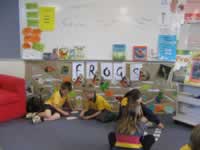
This week while in Sydney training a new group of Master Trainers in the Intel Program Teach Thinking with Technology I will also be participating in the Victorian Dept of Education Knowledge Bank Online Elluminate conference.
So on the morning of October 12th at 9.00 am I'll be sitting at a laptop with headphone and mic in a room in Sydney sharing our story of integrating and developing teachers using ICT and higher order thinking with teachers from Victoria and all over Australia and beyond.
I plan to take the participants on a virtual journey to illustrate the way two teachers and their students used technology and higher order thinking skills to wonder about the life and value of the minibeasts of our world.
Along the way we will use new technologies such a wikis, blogs, podcasts and online video.
I hope you enjoy it.
Wednesday, October 04, 2006
Teaching with Technology wiki
Over the last few weeks, well most of the holidays actually, I have been spending my spare time putting together a wiki that documents the work we have been doing in our Rich Picture case study with Knowledge Bank as part of a project with the Victorian Department of Education and Training.
What I have done is used a wiki to write the story of what we have been doing over the last term on our Minibeast project which investigates the use of Curriculum Framing questions and ICT in the classroom.
It will always be a work in progress I think but is ready now to be added to my blog. It not only contains stories and ideas that we used but also has some short videos of teachers talking about the process and their experiences.
Sunday, October 01, 2006
Tom March Leading the way
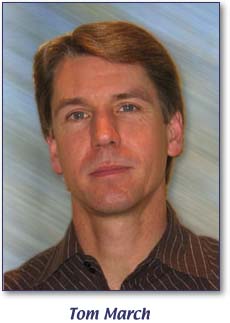
I admire the work that Tom March does. I have been privileged to hear him a number of times and he is a gifted and entertaining speaker but that's not what really matters. What matters is the message that he sends to us as educators. Above all I think, in my humble opinion, his heart is in the right place.
He asks us
How do educators help our students make truly satisfying choices? We can start by taking our cues from Seligman, James, and Harvey. We can "hand students over to themselves." We can engage them in the joys of learning, of making meaning, of being part of something larger than themselves, of testing themselves against authentic challenges. We can shift them from passivity and consumption to action and creativity. And believe it or not, the New WWW can help us.
Just as the Web has empowered students to undermine pointless, rote "research assignments" through copy-and-paste masterpieces, the New WWW shifts learning power to the students themselves. When the world of information explodes beyond what one head can hold, who decides what gets into that head? When students can demonstrate their learning in a persuasive essay, a sardonic blog, a moving short film, a robust wiki entry, or a humorous podcast, why would we demand deadening conformity? The New WWW may do us all a favor and put assembly-line education out of its misery.
Tom March (2005) http://tommarch.com/writings/newwww.php
Today I used started a conversation with my Year 7 students about learning. I showed them a short video that Chris Betcher had added on his Crowded Wisdom blog The video challenges us to think about the schools of yesterday and today and asks basically What is different?
What is different about kids as learners and is that reflected in the way schools are run?
We had an interesting conversation about what learning actually is. What is hard about it? Why do we think? Some of the kids said we don't want to think, school is boring, they don't know why they have to learn. Some even said the video was saying that we don't need to learn traditional subjects like maths and english.
But to me it wasn't what they were saying that was important it was that they were actually forming an opinion, they were actually thinking about their own thinking.
My challenge as a teacher is to find ways and means to make them want to learn, to find things that have real meaning to them.
But also to teach in a way that relates to the world they live in and that recognises that this world is different, is rapidly changing.
They then did a short online quiz that Tom created that asked a big question "What do you think is the most important thing about the internet? " It lead them to understand that learning not just about accumulating knowledge, it's about understanding and using that knowledge .
It was a really valuable exercise and one that I want to work more with over the next few months. Hopefully we will end up with some persuasive and creative ideas that really get our kids to THINK.
The Web 2.0 community
One of the very few drawbacks that I can see about the exciting things that are happening around the explosion of Web 2.0 in education is the amount of time that can be 'wasted' (not) in reading, talking and thinking about what is out there and how to use it to our advantage as educators.
The last two weeks have been our Victorian school holidays and I'm a little embarressed to say that I have taken very little advantage of the usually beautiful spring weather that we have in September because I have been glued to my computer either catching up on projects that have looming deadlines or Skype-ing (Skypename-annieb3525) with other 'online geeks' or as I prefer to think of them, new online friends such as Chris Betcher who is an Australian teacher currently on a teacher exchange in Canada and David Westaway a teacher in Ballarat, Australia.
But I guess the thing that I think is key is not even how we use them but how we educate our kids to discriminate and evaluate exactly what is out there.
To that end one of the things I am participating in is a podcast with Chris which you can hear by going to this link.
Subscribe to:
Posts (Atom)
 Flickr/annieb3525
 Facebook/Anne Baird
 Twitter/annieb3525
 Del.icio.us/annieb3525
 Skype/annieb3525
 AIM/im01annebaird
 GMail/Anne Baird
 coComment/annieb3525
 Technorati/annieb3525
 TeachingwithTechnology/annieb3525


 Posts

